

AI in healthcare: What it means for patients
Share this:
AI in healthcare: What it means for patients sets the stage for this enthralling narrative, offering readers a glimpse into a story that is rich in detail and brimming with originality from the outset. The content dives deep into the significance of AI in healthcare and its transformative impact on patient care.
As we explore the applications, impact on patient experience, and ethical considerations, a comprehensive picture emerges of how AI is reshaping the healthcare landscape.
Introduction to AI in Healthcare
AI in healthcare refers to the utilization of artificial intelligence technologies in the medical field to enhance patient care, diagnosis, treatment, and overall healthcare processes. The significance of AI in healthcare lies in its ability to analyze vast amounts of data quickly, identify patterns, and provide valuable insights to healthcare professionals.
As a result, AI is revolutionizing the healthcare industry by improving efficiency, accuracy, and patient outcomes.
Benefits of Incorporating AI in Patient Care
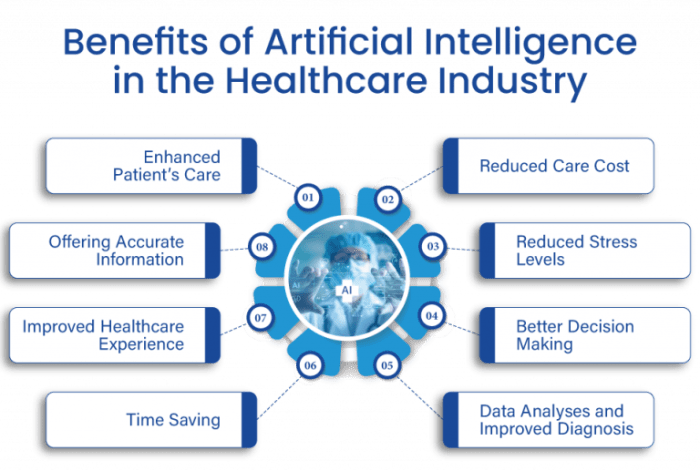
- Improved Diagnostics: AI algorithms can analyze medical images, test results, and patient data to assist healthcare providers in making accurate diagnoses.
- Personalized Treatment Plans: By analyzing patient data and medical histories, AI can help create personalized treatment plans tailored to individual patients.
- Enhanced Patient Monitoring: AI-powered devices can continuously monitor patient vital signs, detect any abnormalities, and alert healthcare providers in real-time.
- Efficient Healthcare Operations: AI can streamline administrative tasks, optimize scheduling, and improve resource allocation in healthcare facilities.
- Predictive Analytics: AI can predict disease outbreaks, patient outcomes, and potential complications, enabling proactive interventions and preventive measures.
Applications of AI in Patient Care
AI is revolutionizing the healthcare industry by transforming the way patient care is delivered. By leveraging advanced technology, AI is being used in various capacities to enhance diagnosis, treatment, and personalized medicine for patients.
Diagnosis and Treatment
AI-powered tools are increasingly being utilized to assist healthcare providers in diagnosing medical conditions accurately and efficiently. Machine learning algorithms can analyze vast amounts of patient data, including medical images, lab results, and genetic information, to identify patterns and trends that may not be easily recognizable by human healthcare professionals.
This can lead to earlier detection of diseases, more precise diagnoses, and personalized treatment plans tailored to each patient's unique needs.
Improving Patient Outcomes
AI technologies such as predictive analytics and natural language processing are helping to improve patient outcomes by predicting potential health risks, optimizing treatment plans, and enhancing communication between patients and healthcare providers. For example, AI-powered monitoring systems can track patient vital signs in real-time, alerting medical staff to any concerning changes promptly.
This proactive approach can lead to early interventions and ultimately better outcomes for patients.
Personalized Medicine
AI plays a crucial role in the advancement of personalized medicine, which aims to provide individualized treatment strategies based on a patient's genetic makeup, lifestyle, and medical history. By analyzing large datasets and identifying biomarkers associated with specific conditions, AI can help healthcare providers tailor treatment plans that are more effective and less invasive for patients.
This approach not only improves treatment outcomes but also reduces the risk of adverse reactions to medications.
Impact on Patient Experience
AI technology has revolutionized patient experience in healthcare by enhancing engagement, communication, accessibility, affordability, and health monitoring and management. Patients now have access to personalized care and timely interventions, leading to improved outcomes and overall satisfaction.
Enhanced Patient Engagement and Communication
AI tools such as chatbots and virtual assistants enable patients to communicate with healthcare providers more efficiently and conveniently. These digital interfaces can answer queries, provide guidance on treatment plans, and offer reminders for medication or appointments, ultimately leading to better patient engagement and adherence to treatment regimens.
Improved Accessibility and Affordability of Healthcare Services
AI-powered telemedicine platforms and remote monitoring devices have expanded access to healthcare services, especially for patients in rural or underserved areas. By eliminating geographical barriers and reducing the need for in-person visits, AI helps make healthcare more accessible and cost-effective for patients, ensuring timely interventions and preventive care.
Better Health Monitoring and Management for Patients
AI algorithms analyze vast amounts of patient data to identify patterns, predict health risks, and personalize treatment plans. Wearable devices and health apps powered by AI can continuously monitor vital signs, track medication adherence, and provide real-time feedback to both patients and healthcare providers.
This proactive approach to health management enables early detection of issues, timely interventions, and improved overall well-being for patients.
Ethical and Legal Considerations
When it comes to the integration of AI in healthcare for patients, it is crucial to address the ethical implications that arise. The use of AI technologies can bring about significant benefits in terms of efficiency and accuracy in patient care, but it also raises ethical concerns that need to be carefully considered.Privacy concerns and data security issues are paramount when utilizing AI in healthcare settings.
The collection, storage, and analysis of patient data by AI systems must adhere to strict privacy regulations to ensure that sensitive information remains protected. Patients need to have full transparency regarding how their data is being used and shared to maintain trust in the healthcare system.Regulations and guidelines governing the use of AI in patient care play a vital role in ensuring that ethical standards are upheld.
It is essential for healthcare providers and organizations to comply with existing laws and regulations to safeguard patient rights and prevent any misuse of AI technologies. Continuous monitoring and evaluation of AI systems are necessary to mitigate any potential risks and ensure patient safety.
Ethical Implications
- The use of AI in healthcare raises concerns about decision-making processes and accountability, especially when AI algorithms are involved in critical medical decisions.
- Ensuring that AI systems are unbiased and do not perpetuate any existing healthcare disparities is a key ethical consideration in the implementation of AI technologies.
- Ethical dilemmas may arise when AI systems have the capacity to outperform human healthcare professionals, leading to questions about the role of AI in patient care.
Privacy and Data Security
- AI systems must comply with data protection regulations such as HIPAA to safeguard patient information and prevent unauthorized access.
- Encryption and secure data storage practices are essential to protect patient data from cyber threats and breaches that could compromise patient privacy.
Regulations and Guidelines
- Healthcare organizations must adhere to regulatory frameworks such as the FDA guidelines for the development and deployment of AI technologies in healthcare.
- Ethical review boards and committees play a crucial role in evaluating the ethical implications of using AI in patient care and ensuring compliance with ethical standards.
Closure
In conclusion, AI in healthcare: What it means for patients encapsulates the evolving relationship between technology and healthcare, showcasing the immense possibilities and challenges that lie ahead. As we navigate the ethical and legal considerations while celebrating the benefits for patients, it becomes evident that AI is not just a tool but a fundamental force in shaping the future of healthcare.
Essential Questionnaire
How does AI improve patient outcomes?
AI technologies help in early diagnosis, personalized treatment plans, and predictive analytics to enhance patient outcomes.
What are some privacy concerns related to AI in healthcare?
Privacy concerns include data security, patient confidentiality, and the potential misuse of sensitive health information.
Are there regulations governing the use of AI in patient care?
Yes, various regulations and guidelines exist to ensure the ethical and safe implementation of AI in healthcare for patient benefit.